
Strumento gratuito
Quanto deve essere spesso il mio cavo per altoparlanti?
Enter the cable length and your speaker's impedance and see which thickness is enough, with the cables in that thickness and their lowest price.
Scegli almeno 0,75 mm²
Per 8 metri di cavo verso diffusori da 8 Ω servono almeno 0,70 mm² per restare sotto il 5% di perdita.
Calcoliamo con il rame. Il cavo CCA (alluminio ramato) ha più resistenza: scegline uno di sezione più grande.
Questi vanno bene per il tuo risultato
-
Pro-Ject
-
Pro-Ject
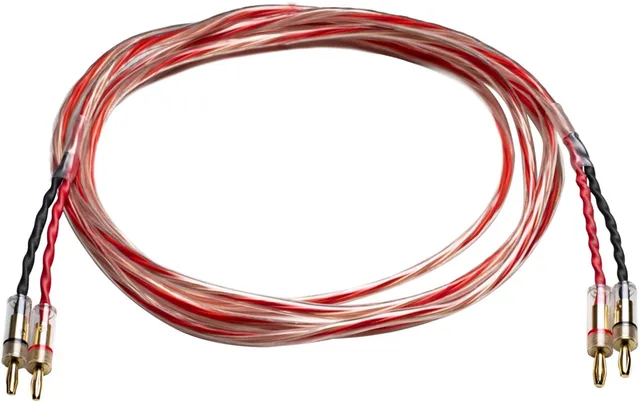
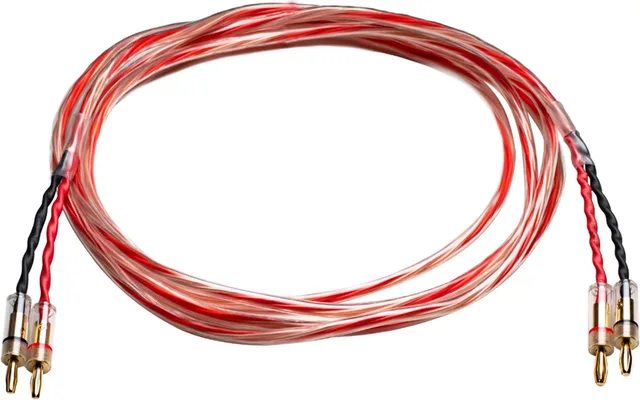
Connect it LS-E Luidsprekerkabel Banaanstekker
2x0,75mm 4,0M · Heldere Audioweergave4 m0,75 mm² -
Hama
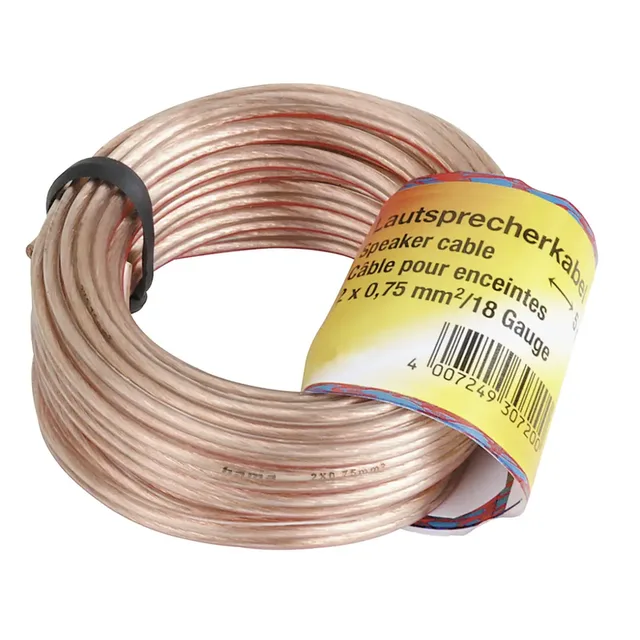
00205141 Lautsprecherkabel, 2x 0,75 mm², 10 m, Transparent
10 m0,75 mm² -
Hama

86601 Luidsprekerkabel
2 x 0.75 mm² per meter0,75 mm² -
Hama
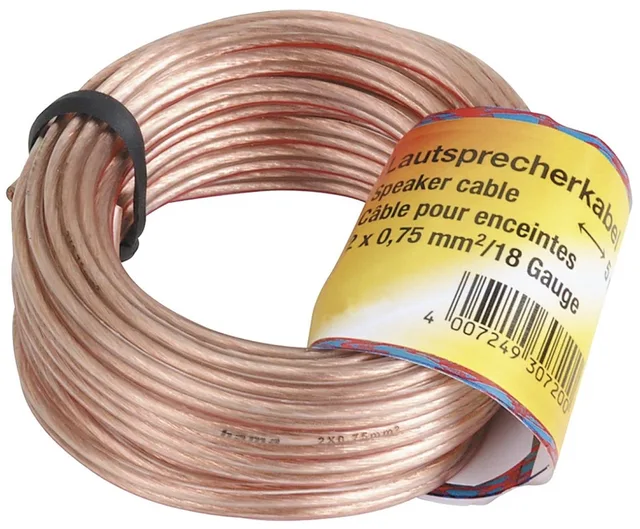
HQ 20m luidsprekerkabel 2x 0,75mm² dik 2-aderige boxenkabel hifi LS-kabel
20 m0,75 mm² -
LogiLink
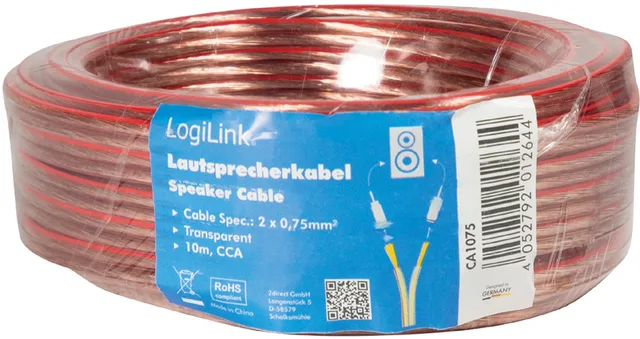
Lautsprecherkabel
2 x 0,75 qmm, 50 m50 m0,75 mm² -
Transmedia
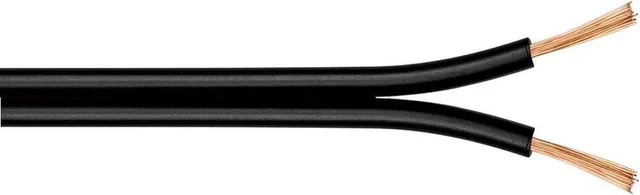
Luidspreker kabel
(CCA) · 2x 0,75mm² / 100 meter100 m0,75 mm² -
Transmedia
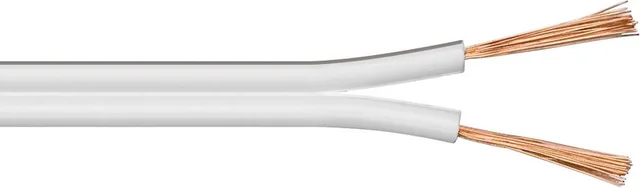
Luidspreker kabel
(CCA) · 2x 0,75mm² / 25 meter25 m0,75 mm² -
Transmedia
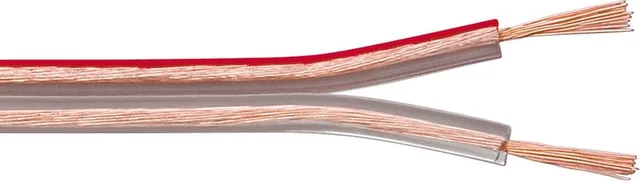
Luidspreker kabel
(CCA) · 2x 0,75mm² / 30 meter30 m0,75 mm² -
Transmedia
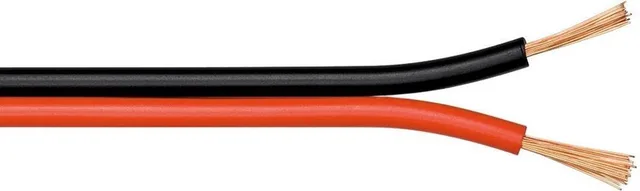
Luidspreker kabel
(CCA) · 2x 0,75mm² / rood/zwart10 m0,75 mm² -
Transmedia
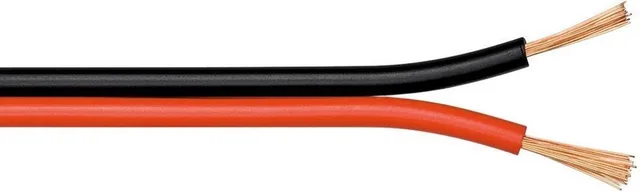
Luidspreker kabel
(CCA) · 2x 0,75mm² / rood/zwart100 m0,75 mm² -
Transmedia
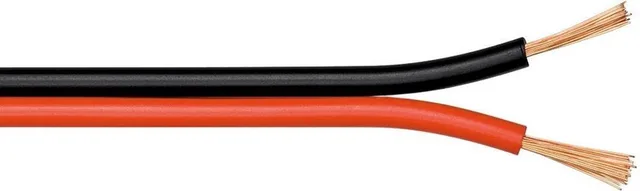
Luidspreker kabel
(CCA) · 2x 0,75mm² / rood/zwart25 m0,75 mm²
Prezzi dei negozi che confrontiamo. Nessuno paga per una posizione. Come classifichiamo
Come calcoliamo
The resistance of a cable is R = ρ × 2L ÷ A. Here ρ is the resistivity of copper (0.0175 Ω·mm²/m), L the length of the cable in metres and A the cross-section in mm². The 2 is there because a speaker cable has two conductors: out and back.
We keep the cable's resistance at no more than 5% of the speaker's impedance. That is a common rule of thumb, not a standard. Then we round up to the next standard size.
CCA cable (copper-clad aluminium) resists more than copper. Choose one size thicker. We read the thickness of the cables in the list from the product name. A cable with no thickness in its name is not shown.